How to create a fantasy kingdom map with coloring pages
Turn fantasy coloring pages into a child’s imaginary kingdom with landmarks, paths, map symbols, and simple storytelling ideas.
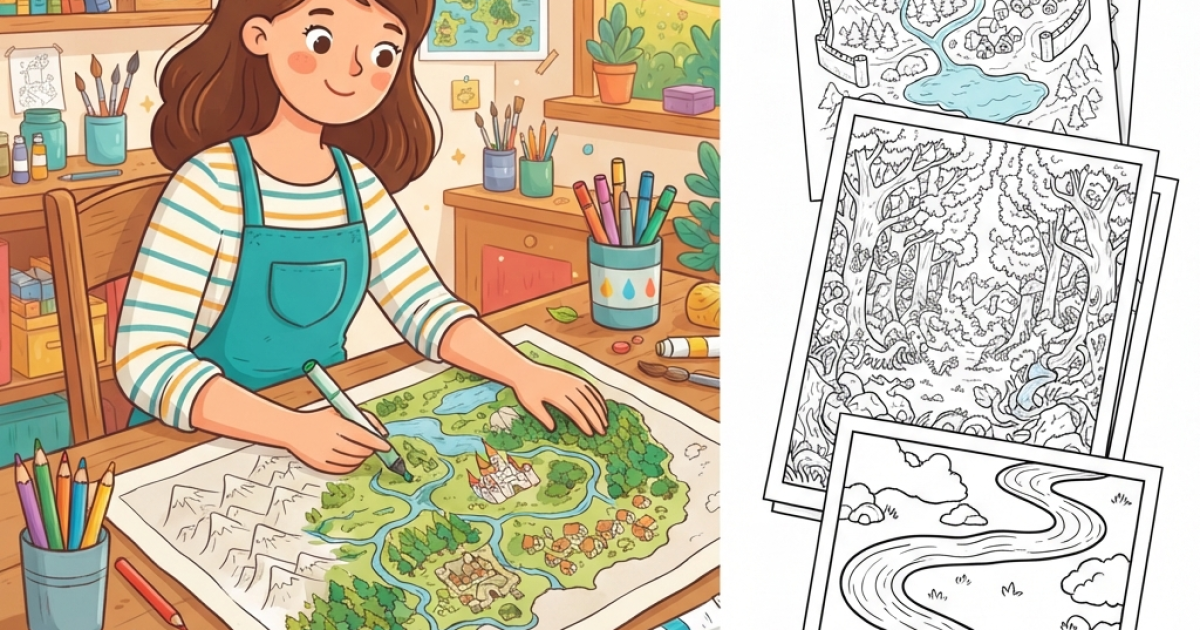
Table of contents
- Start with the kingdom’s story
- How can Fantasy coloring pages become a map?
- What are the best ways to plan the landscape?
- How do you connect places with paths and symbols?
- Color, label, and bring the map to life
- Turn the finished map into a family activity
- Frequently asked questions
Creating a fantasy kingdom map with coloring pages gives your child a playful way to build an imaginary world, one colored landmark at a time. As a parent, you can help turn familiar fantasy characters and creatures into the castles, forests, caves, and villages of a kingdom your child invents.
The process does not need special art supplies or mapmaking skills. Start with a simple story, choose a few printable Fantasy coloring pages, and arrange the finished pictures on a large sheet of paper. Your child can then draw routes between them, add place names, and decide who lives in each part of the kingdom.
Start with the kingdom’s story
A map feels more meaningful when it has a reason to exist. Ask your child to imagine who rules the kingdom, what its people need, and what problem or mystery might lead someone on a quest. A young dragon looking for a safe place to hatch, for example, could inspire a mountain nest, a nearby village, and a winding path through the woods.
Questions to help shape the world
Keep the planning conversation light and let your child make the decisions. Try asking:
- Where does the kindest creature in the kingdom live?
- What place would an explorer be nervous to visit?
- What magical treasure is hidden in the forest?
Write down three to five locations before you begin coloring. This limit gives children enough choices to get started without making the project feel overwhelming.
Discover Our Coloring Pages
How can Fantasy coloring pages become a map?
Choose coloring pages that represent places or inhabitants in the story. A character picture can stand for a home, a meeting point, or a landmark. For example, Gnome Painting with a Hedgehog could mark a woodland artist’s cottage, while Glistening Orb Carried by Pixie might represent a magical grove.
Pick pictures that play different roles
Mix characters, creatures, and objects so each picture adds something new to the kingdom. A Mysterious Dragon Hatching Eggs coloring page might inspire a protected nest among the mountains. A Singing Fairy with Glittering Wings could live beside a lake or flower meadow.
Print the selected pages and color them before cutting them out. Browsing KidColoro’s coloring page categories can also help you find extra inspiration if your child wants to add nature or other familiar details to the fantasy setting.
What are the best ways to plan the landscape?
Use a large sheet of paper, poster board, or the back of a piece of wrapping paper as the map base. Lightly sketch the kingdom’s outline first, then decide where its main features belong. A river can divide the land, a mountain range can mark the border, and a forest can connect a village to a hidden clearing.
Building the map from large shapes to small details
Start with two or three big features rather than trying to draw everything at once. Add a coastline, hills, or a central forest, then place the colored fantasy pictures around them. This makes the map easier to read and gives children a useful sense of distance and direction.
Consider adding one surprising landmark, such as a bridge made of crystals or a tower hidden behind a waterfall. If the story includes an enchanted garden, browse the Flowers coloring pages for colorful ideas.
How do you connect places with paths and symbols?
Once the landmarks are in place, connect them with roads, trails, rivers, or magical routes. Ask your child how a traveler would get from the village to the dragon’s nest. Would they cross a wooden bridge, follow a stream, or take a longer path around a spooky forest?
Create a simple map key
A map key explains the symbols used on the page. Together, choose a few easy marks:
- A star for a castle
- A dotted line for a secret trail
- A wavy blue line for water
- A small tree for a forest
Make the trip interesting by adding one obstacle and one helpful stop. A Ninja Toad Leaping with Lily Pad could become a guide who helps travelers cross a marsh.
Color, label, and bring the map to life
Color can distinguish different areas and make the map easier to follow. Try green for forests, blue for rivers, and brown or gray for mountains. Let your child choose the palette-a purple forest or golden lake can signal that this is a fantasy world.
Add names and a title
Invite your child to name the kingdom and its landmarks. Names can be silly, descriptive, or inspired by a character: Moonbeam Meadow, Hedgehog Hollow, or Dragon’s Rest. Finish with a title at the top and a border around the map. A clear map is more useful than one packed with details, so pause before adding more and check that the key places are easy to find.
Turn the finished map into a family activity
When the map is complete, use it as a starting point for a short storytelling game. Choose a character, pick a destination, and take turns deciding what happens along the way. For instance, a traveler heading from Hedgehog Hollow to the dragon’s mountain might meet a fairy or discover a new path.
Adapt the project for different ages
For preschoolers, focus on coloring, placing pictures, and naming a few favorite landmarks. Early elementary-age children can draw paths and use a simple key. Older children might add a scale or a written adventure that follows a route. Keep the finished map somewhere visible so your child can return to it and add new places as stories grow.
Frequently asked questions
What supplies do I need to make a fantasy kingdom map?
You only need paper or poster board, coloring pages, crayons or colored pencils, and a pencil for sketching. Scissors and glue are optional if you want to cut out and arrange colored landmarks.
How do I make a fantasy map with a young child?
Keep the map simple and let your child choose a few pictures and locations. You can draw the outline and basic landscape, then invite them to color, place landmarks, and name each spot.
Can I use coloring pages as map landmarks?
Yes. A fantasy character or creature can represent a home, a meeting place, or a special destination. Color the pictures, then place them beside drawn features such as a river, cave, or village to show where they belong.
How can I make a fantasy kingdom map educational?
Invite your child to use direction words, follow routes, compare distances, and make a simple map key. Keep the focus playful by connecting each map task to the characters and adventure in the kingdom.